Author: Snorkel Ken

  • 8 Dangers of the Ocean that You Need to be Aware of at All Times

    8 Dangers of the Ocean that You Need to be Aware of at All Times

    Manly Beach, New South Wales, Australia; strong current danger sign with surfers in the background
    Manly Beach, New South Wales, Australia; strong current danger sign with surfers in the background

    Living near the ocean is a beautiful thing.  Visiting island paradises during vacation is the treat of a lifetime.  All of that beach and ocean time comes with its own set of risks, though.  Between dangerous ocean conditions, not so friendly marine life, tides, currents, weather and contaminated water, your time in paradise may have a pricey paradox.

    There are times when trips to the beach to do some snorkeling aren’t always the “fun in the sun” that it was planned to be. Don’t be scared of the beach, but respect it.  Never turn your back on the ocean or look to closely at things that don’t seem familiar or you’re unsure of.  And…

    Keep Alert of the Following 8 Ocean Dangers
    rip-currentRip Currents

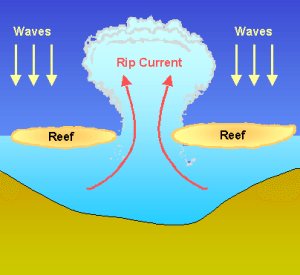
    Rip currents are strong, flowing ocean currents that pull away from shore and out to the open ocean.  They usually begin at the shoreline, through the flowing waves, and right past the break…  Never fight a rip current if you’re stuck in one and don’t panic.  Swim parallel to shore until you’re out of the current and then head back in.  If you’re in trouble, wave your hands.  Always swim at beaches with lifeguards. For added safety wear a snorkel vest!  

    Shorebreak

    Shorebreaks can be violent and often occur when there is a quick transition from deep to shallow waters.  The water breaks violently on the shallow waters and shore causing you to tumble and be thrown.  This type of ocean danger can break bones and necks.  Beware of warning signs and if you’re unsure about anything (or if no signs are posted) ask a lifeguard about conditions.

    Lightning

    lightning

    Lightning kills, on average, about 35 to 40 people in the United States each year.  Don’t go to the beach on days when there is thunder and lightning.  If a thunder storm happens while you’re at the beach then seek shelter and don’t go back until 20 to 30 minutes after the thunder has stopped completely.  For the safest locations, find a residential building or automobile.  Stay away from rain shelters and open top vehicles.

    Tsunamis

    Tsunamis happen and they can’t be predicted because they are the destructive aftermath of other occurrences, mainly earthquakes, in coastal areas.  While not all tsunamis are caused by earthquakes (the other causes include meteor impacts, landslides, and ocean floor slumps) they can be very deadly no matter how they form.  You can read more about tsunami preparedness here.

    87836042_XSSharks

    Shark attacks are rare but when they do happen they usually occur close to shore between sandbars after sharks have been trapped by a low tide.  Not always, though.  Sharks are wild marine animals and unpredictable.  Stay close to shore, don’t go into the water with open wounds, don’t wear jewelry or flashy color (sharks see contrast and “bling” really well), and stay away from the water when sharks are most active which are nighttime and twilight.

    Jellyfish

    Jelly fish sting.  It hurts.  It can be deadly.  And they’re hard to see.  The good news is that of the 2,000 plus species of jellyfish, only 70 of them really do any major damage.  Keep away from them in the water and on the shore as even washed up jellyfish tentacles can sting.  Lifeguards can help out with first aid for jellyfish stings.

    Sunburn and Heatsunburn

    The beach can start great but all of that heat an sun can catch up to you.  There is always the possibility of heat cramps, heat exhaustion, and heat stroke (deadly) with too much fun in the sun.  Don’t forget about sunburn, either.  When a burn is severe and is accompanied by a headache, chills, or a fever you should seek medical help right away. Be sure to protect your skin from the sun while it heals. SUNSCREEN, SUNSCREEN, SUNSCREEN. Stay hydrated.  Stay hydrated. Stay hydrated.

    Water Quality

    Depending on where you are in the world, the water and ocean quality of that area may not even be suitable for swimming or even touching the ocean water.  When land and fresh water drain into the ocean it is sometimes contaminated with sewage.  Other ocean quality hazards include sunken boats and chemicals, animals, pets, fertilizers, septic, and oils/hazardous substance spills.  High levels of bacteria and other chemicals in the water can cause gastrointestinal illnesses in those that swim directly in the water. When visiting the beach, be aware of all beach closures and advisories.

    That’s it.  Stay safe and Happy snorkeling.  If you haven’t already done so, please sign up for our newsletter  (located at the bottom of the website “Join our Newsletter) or like the Facebook page so that you can stay up to date on all of our new reviews and articles.

  • PROMATE Kids Snorkeling Set Review with Purge Mask  and Dry Snorkel

    PROMATE Kids Snorkeling Set Review with Purge Mask and Dry Snorkel

    Promate is a brand we trust highly in and this is one of the best snorkeling sets for kids that we have come across.  For that reason, it is going to #1 on our “Kids Snorkeling Sets” rating for a while to come.  They are one of the best diving companies in the world and they make great recreational snorkeling gear for adults and kids.  The mask skirt is made of soft, comfortable silicone with a patented design to push bubbles away from the viewing area.  The snorkel is dry snorkel (it claims to be 100% dry but we had water in ours a time or two when we were trying it).  Also, the fins are a soft rubber with an open heel design for the comfort of small, growing feet.

    This is a safe, reliable snorkeling set for any kid.  Also, the set comes in two ways: mask, snorkel, fins and drawstring bag OR mask, fins, snorkel, drawstring bag and snorkel vest for the ones who need it.  Personally, I recommend that all kids wear a snorkel vest until both they and the parents are 100% comfortable with them snorkeling without a vest.

    Details of the Promate Kids Snorkeling Set:promate-kids-snorkel-set

    • Promate Pace Junior Snorkeling Fins
    • Promate Chico Purge Junior Mask
    • Promate Nino Junior 100% Dry Snorkel
    • Nylon Mesh Bag w/ Cord Drawstring
    • Ideal snorkeling combo set for Youth, Juniors, and small Adults.
    View product B0043BR4UG on Amazon

    Below are the Options for this Promate Kids Snorkel Set.

    Remember, that the snorkeling vest will be a little more money but a lot more peace of mind!

    View product B009D73VX4 on AmazonView product B0043BR4UG on Amazon

    View product B00309IGMM on AmazonView product B00309F0HQ on Amazon

  • Beginners Guide to Choosing and Fitting a Snorkel Mask

    Beginners Guide to Choosing and Fitting a Snorkel Mask

    how-fit-snorkel-mask

    You mainly need to make sure that the mask fits your face. If you don’t have the right fit then you won’t have the comfort but more importantly you won’t have a good seal. Not having a good seal means that water is going to get into your mask and you’ll be purging it constantly and probably get salt water in your eye.

    What Size Face Do You Have?

    We all have different sizes and shapes of faces. It’s a no brainer, right? So that means that not every mask will fit different people the same. Determine whether you have a narrow face or a large one. Then figure out if you have a long face or shorter one. It’s not that hard and you may have to be painfully truthful with yourself. Make sure that you’re picking a snorkel mask that looks like it will fit you and not just one that looks cool or has the panoramic view.

    5 Steps to Fitting Your Snorkel Mask

    Step 1: Fit Test

    Once you receive your mask or have it in your hand you have to do the fit and comfort test. All snorkel masks, even the same sized ones, will feel differently on your face. Hold the mask to your face and look in a mirror. How does it fit? Is there plenty of skirt on your upper lip without actually touching your lip? Is there enough skirt on the sides of your eyes and above your eye brows so that the skirt is touching skin to form a good seal? Is any of the frame or lens touching your nose? It may not seem uncomfortable yet but once you have the snorkel mask strapped to your face then the discomfort can run up on you really quick.

    Step 2: The Suction Test: Does it Stick?

    Now, keep your mask unstrapped from your head. Place it to your face, press a little bit, inhale through your nose just a little. That should suction the mask to your face. When you let go the mask should stay where it is as long as you don’t exhale. Move your head a bit and make sure that the mask is still suctioned to your face.

    Smiling and laughing will often break the seal a bit, but that’s why you know how to clear your mask and snorkel. Slight movement, however, should not break the seal.

    Step 3: Put the Mask Completely On

    Now, put the mask on fully…straps and all. You should have an airtight fit with just a little bit of pressure from the straps. The straps should not touch the ears on the way by to the back of your head. They should sit higher than that but not on the top of your head so that it will slip off.   If you remove the mask and you have large ugly, red marks from the straps then you’re wearing your snorkel mask to tightly. You should also have an easy time pinching your nose through the skirt which will be vital to clearing your ears and equalizing pressure when diving under water.

    Step 4: Sample the Mask with the Snorkel Attached

    This is an important part of the mask fitting that needs to be done. The mask, with snorkel attached and in your mouth can change the shape of your face…mainly your lips and cheeks. Make sure that you still have a good fit.

    You Probably Have the Right Snorkel Mask.  Try it in the Water!

    If you’ve made it this far then the only thing left to do is to try the mask and snorkel in the water. Remember to take it easy at first as you’re getting used to your new snorkeling equipment. We’re willing to bet though that you have a great fitting snorkel mask if you’ve done all the steps to test the fit.

    Take a look at some our great fitting snorkeling sets and masks.

    Stay safe and happy snorkeling!

  • ScubaPro Frameless Snorkel Mask Review

    ScubaPro Frameless Snorkel Mask Review

    View product B0000DYVIF on Amazon

    The ScubaPro mask is a single lens, frameless mask that feels light on the face and in the hand. The unique design allows there to be the one lens and a skirt but no frame. You can’t beat the comfort of a frameless mask.

    Features of this Frameless, Single Lens Snorkel Mask from ScubaPro:

    The single lens gives a great deal of comfort and not having a lens means that you can spend more time in the water and comfortably snorkeling.  While this mask is technically a dive mask it can be used for snorkeling.  It also has quick adjust buckle system that easily done with one hand.

    The lightweight, frameless design makes clearing the mask an ease due to its low volume and profile in the water.  Many divers claim that they would not dive with any other mask and that no other mask they found fits as comfortably as the ScubaPro frameless…even ones that are double the price.

    The mask sits close to the eyes, the entire mask is foldable and will fit into a cargo pocket, and the double-edged, soft silicone skirt makes this snorkeling mask a treat to wear.

    Note:  This is a tempered glass mask.  While you can use this mask for snorkeling and SCUBA, the same cannot be said for masks without tempered glass lenses as they are unsuitable for diving/SCUBA.

    This frameless snorkel mask from ScubaPro also comes in mini design with semi-clear silicone and a Gorilla style make, as pictured below.

    (Images are clickable)

    View product B00IU3QVTI on Amazon

    View product B009LB4WSA on Amazon

  • 6 Best Snorkel Gear Bags to Carry Your Gear and More!

    6 Best Snorkel Gear Bags to Carry Your Gear and More!

    best-snorkel-bags

    Note:  For the purpose of this article we will recommend the Top 3 Individual Snorkeling Bags and the Top 3 Large Snorkeling Bags.

    Snorkeling gear bags are an important part of your snorkeling adventure. In many cases, the snorkeling gear set that you buy will come with a carry bag. We’ve found that most of those bags aren’t worth much more than transporting your new snorkel set from the initial purchase to your first snorkel adventure.

    Your opinion may differ from ours, though. It really just matters what you’re planning on doing with your gear, how often you plan on snorkeling, where you plan on snorkeling, and how long you plan on storing your snorkeling gear in between uses.

    We always go snorkeling with at least two people. We never snorkel alone.

    So here’s what we usually like to be able to fit in our snorkeling bag:

    • 2 complete sets of snorkel gear (two masks, two snorkels, 4 fins)
    • Bottle of sunscreen
    • Bottle of mask defogger
    • 1 GoPro with float stick and waterproof case.
    • 1 Nikon CoolPix camera
    • Two Hydro Flasks of Water
    • 2 beach towels
    • Waterproof bags (sandwich size) for phones, jewelry and money (depending on pre or post snorkel activities)
    • Food items such as granola, protein bars, and jerky.
    • Possible items that we bring: books, clothes to change into, hats, etc.

    Other Requirements:

    • Back carried like a backpack.
    • Light weight
    • Quick drying

    You can see that we have to fit a lot into our bag so we’re actually asking quite a bit from our snorkeling gear bag and we have searched far and wide for the perfect bag for our needs.

    Why do you need all of that for a snorkeling trip?

    Not all of the snorkeling spots that we frequent are right off the road or close to a beach parking lot. Sometimes we have to hike or walk for a little bit prior to getting to a snorkel spot that we’re aiming for. So it’s easier if we have everything we need right in a snorkel bag on our back. If snorkeling at a local beach or popular spot then we don’t need this kind of bag even though we usually bring it, along with an extra load of food in a medium-sized, shoulder carried, soft cooler for more water and food. So, like we said it really just matters what kind of activities you’ll doing mostly.

    Also, we like to rinse our snorkeling gear in fresh water as you should to keep your gear healthy and longer lasting. Once back home or at a local beach with a shower head, we usually take everything out of the snorkel bag except for the gear and generously soak and rinse it with the fresh water. Then when we are home we can just take the items out and lay them out for drying…this is why we like the bag to also have a quick dry feature.

    If you feel that this type of basic load is similar to what you’ll be lugging around on snorkeling adventures than below is a list of our 10 favorite snorkeling bags.

    Best Individual Snorkel Gear Bags


    View product B001N14UEM on Amazon Promate Deluxe Snorkel Bag

    This bag is large enough to carry 1 set of everything that you need in our list. For instance, one full set of snorkeling gear, towel, defogger, food, water, etc. This is the bag, along with the US Divers and Aqualung below that is best if you’ll be carrying your own snorkel gear around.


    View product B000EM2S68 on AmazonUS Divers Coast Back Pack

    US Divers is a leader in the snorkel gear industry and we recommend them at all times. The bag below, made by US Divers parent company Aqua Lung, is a bag that is a little bit of higher quality but which still holds what you need to capacity.


    View product B00B5EKIX4 on AmazonAqua Lung Deluxe Snorkel Pack

    AquaLung does lots of dive and snorkel apparel and gear. They are the premiere producer and provider of quality snorkel gear in the world. Take the time to compare US Divers and AquaLung snorkel gear and you’ll find that the AquaLung stuff is a little more expensive for a slightly higher quality of product.


    Best Large Snorkel Gear Bags


    View product B00BF4UEF6 on AmazonStahlsac Snorkel Bags

    These are exactly the kind of bags we’re looking for; large, quick-drying, and back carried. While Stahlsac and the other two bags below (New Mares and Akona) are a little more expensive than the previous ones, you’ll soon find out the true benefit of having a large, snorkeling bag on hand for every excursion.


    View product B006S6IEGW on AmazonNew Mares Deluxe Bag

    The New Mares Deluxe is a big, sturdy bag but it is mesh. Mesh is never one of our first choices for material both for privacy and durability but the New Mares is a different animal. Wide straps make the bag comfortable to carry and it folds into itself for easy storage after use. This is helpful for traveling if you’re not storing your gear in it the entire time which could easily an conveniently be done.


    View product B000JWY3V6 on AmazonAkona Large Dive or Snorkel Bag

    This is an incredibly durable bag that adds extra space by placing a “fanny bag” like attachment to the outer and lower portion of the bag. This is the perfect place for your waterproof bag with phone and wallet, sun glasses, defogger, and sunscreen.

  • Tribord Easybreath Snorkeling Mask Review

    Tribord Easybreath Snorkeling Mask Review

    The makers of the Tribord Easybreath snorkeling maskclaim that with this specialty mask, you can breathe underwater as easily as you can breath on land.  They also like to point out the fact that the largest issue with snorkeling is being able to breath easily with the snorkel in your mouth.

    Important Note and Update:  If you think the Tribord EasyBreathe is too expensive, then please read this first! The Easybreath Snorkel Mask by Tribord does have it’s huge advantages, particularly for those that have tried snorkeling and found it to be difficult.  Before you give up on having a great time snorkeling then definitely give the EasyBreath a try:

    Advantages of a Full Face Snorkel Mask:

    • Above all, the Tribord EasyBreath is the ULTIMATE option for those that have trouble wearing and breathing through a traditional mask and snorkel.
    • Large viewing window for a more visible snorkeling experience with 180* viewing window.
    • Large frame around the entire face means more comfort as well because the pressure is evenly dispersed.

    You would also think that breathing through the mouth and nose into a mask that size then fogging would be an issue, but Tribord and the Easybreath have a solution for that too.  The snorkel mask is prevented from fogging by a double air-flow system that is identical to the system used in domestic extraction fans.

    Cons

    View product B01CPS2TX0 on Amazon
    • It doesn’t really teach you to snorkel.  There is no way you’ll know how to snorkel without this mask because it’s just not traditional snorkeling.
    • It’s a high volume mask so not all good for free-diving, even at the hobbyist or recreational level.  It is ONLY a snorkel mask that allows you to view the underwater world.

    Does the Easybreath Snorkel Mask deserve a look into?  Yes.  If you absolutely cannot put a snorkel mouthpiece in and breath through it.  If you really want that 180* viewing window then go ahead try this mask out.  Otherwise, stick with a traditional snorkeling set. Note:  We contacted Easybreath makers in order to get some specific questions answered and to possibly get a mask to try out and review.  We have yet to hear back from the company. Since writing this review there are now a lot of full-face snorkel mask alternatives of high-quality.  We’ll be covering all of them in the months to come.  The Easybreath Snorkel Mask is Available in sizes S/M or Lg/XL and the following colors Atoll, Blue and Pink.

    View product B01DSXPACI on Amazon

    Interesting Read: The Tribord is Better than the Alternatives as one buyer of a knock off full face mask found out.

    Not what you’re looking for?  Try out these other great Snorkel Sets!

    Bestseller Best Adult Snorkel Sets
  • Snorkeling Age and Ability Guidelines

    Snorkeling Age and Ability Guidelines

    too-old-too-young-to-snorkel

    Snorkeling is one of those activities that really can cater to the many different types of people in the world. Snorkeling as a recreation or a sport is more lenient in regard to age, gender, body type, and ability. Still, you should always be mindful of the basics before you go snorkeling:

    • What are your limitations?
    • How old is too old to snorkel?
    • How old is too young to snorkel?

    These aren’t only questions that you need to ask in regards to yourself but also in regards to those who are snorkeling with you. If you’re the more experience snorkeler, or just protective and aware, then make sure that you’re not asking or expecting someone else to do something that you are not positively sure they can handle. For peace of mind, consider getting a snorkel vest for the young or old.

    young snorkelerToo Young to Snorkel?

    You can often see very young children snorkeling and swimming in the water, especially in coastal towns and on islands where many of the locals and residents have been raised around the water their entire lives. This isn’t the norm, though.

    In many cases a young child will want to snorkel and be very comfortable in the water. However, there ability to comprehension of basic water safety can often times come in to question. Most young people have very little sense of mortality or the dangers that can be hiding in the most beautiful of things…like a tropical ocean.

    A child who knows how to swim will make them more comfortable and confident in the water as well as giving the adults some peace of mind that they are trained. While a strong comprehension of swimming and water safety is not necessary to snorkel, a basic understanding and ability is. There are some that may argue with us on that stand but we are behind it 100%. If a child is not already a decent swimmer then don’t put them in the water with junior snorkel set without the closest of adult supervision.

    Too Old to Snorkel?

    Sure, snorkeling can be referred to as a “lazy person’s sport”, in all truthfulness snorkeling and swimming can be too-old-to-snorkelvery taxing on the body. Those of us who are on the older side of the age spectrum should be wary of our abilities and physical conditioning before taking on snorkeling, especially a moderate snorkeling adventure.

    It’s easy to become entranced with the underwater element as you discover, photograph, and gawk at the marine life…so it’s easy to forget that snorkeling falls within the exercise of swimming category. You can conserve energy by knowing proper fin technique, treading water on your back and resting often. If you’re entire physical regimen consists of watching fist pumping at televised sporting events then try to condition and gauge your physical abilities prior to doing any vigorous activity, to include snorkeling.

  • Silicone: Best Material for Snorkel Mask Skirts

    Silicone: Best Material for Snorkel Mask Skirts

    There are a bunch of things to consider when you’re getting new snorkel gear; size, seal, comfort, color and durability. The most important thing that you’re looking for out of those factors is fit. Without a proper fit the mask will leak, the seal will be bad, and/or you’ll be uncomfortable. The best way to ensure a proper fit and seal on a snorkeling mask is with a silicone skirt.

    TUSA Mask

    The skirt of the mask is the part that of the mask that outlines the frames and the lenses. It feels like a soft plastic when, in fact, it is actually silicone in 90% of the cases. There are still some department stores and cheap snorkel gear sellers that are selling masks with plastic skirts and that is not what you’re looking for.

    Why is Silicone the Best Material For Snorkel Mask Skirts?

    Silicone is formed by chains of silicon and oxygen atoms and organic groups attached to the atoms that are silicon. For this reason, that makes silicone completely versatile. It is chemical resistant so that it holds up against the harsh salt of the ocean, it is tough against temperature changes so that it doesn’t melt in the backseat of the car in tropical climates, and it is malleable and soft so that it fits comfortable around the face and ensures a great seal of the mask.

    Years ago, snorkel mask skirts were made of black or dark plastic. This has a more claustrophobic feel and keeps a lot of the sunlight out of the mask for easier vision. Silicone, when first introduced to the snorkeling and SCUBA mask world was cloudy but still allowed more light than plastic. Over time, the silicone got “cleaner” and less cloudy.

    These days there are things called “crystal silicone” or “liquid silicone”. These are the purest forms of silicone and are near clear which allows for optimal peripheral vision and light. There is some added advantage to the crystal and liquid silicone mask skirts but not so much that you would need to replace a snorkel mask that has a regular silicone skirt.

  • Do You have to See Fish to be Snorkeling?

    Do You have to See Fish to be Snorkeling?

    Snorkel Ken

    I often go snorkeling with people who expect to see fish. I know that sounds like a given to a lot of people but to be honest I don’t go snorkeling all the time to see fish and coral. I go for a lot of reasons.

    Let me make one thing perfectly clear: I don’t go to the beach or to the ocean unless I can snorkel in that location. Living in Hawaii there are a lot of famous beaches that I just don’t care because of the high-surf and sandy, non-snorkeling bottoms.

    There are lots of reasons, though, to grab your snorkeling gear and head to the beach and NOT see fish with a mask, tube and flippers.

    My Favorite Reasons to Snorkel and NOT See Fish:

    To See Turtles, Seals and Dolphins

    Lots of the best places to see sea turtles, seals and dolphins are not the shallow waters with lots of coral. For those sightings you often need to go to calm bays with semi-deep water that is also clear.

    Snorkel for Sea Shells

    I dig going after sea shells when snorkeling. They’re a blast to find and can keep me busy for a while. In order to find sea shells I usually just snorkel in the water a few feet (ocean side, not beach side) from where the ocean breaks on the beach. That’s where the debris tends to gather..against the incline where the sand really starts to rise.

    Recreation and Fitness

    When I go stand-up paddle boarding (SUP), I bring my snorkel gear. When I’m on a kayak…I bring my snorkel gear. I always have, at the least, my snorkel and mask. Swimming is a great form of exercise and whenever I’m in the ocean I feel better with a mask and snorkel. I spend more time swimming and treading water.

    Those are just a few of the reasons why people would love to go snorkeling and not see fish. If you already have the snorkeling bug then you probably know exactly what I mean.

    Stay safe and Happy Snorkeling!

  • Snorkel First Aid:  How to Treat Coral Cuts

    Snorkel First Aid: How to Treat Coral Cuts

    coral-cut-treatment

    If you make it a point not to disturb coral to the best of your ability, following the snorkeling etiquette rules, then you should avoid most injuries from coral.  However, every once in a while the surf or water have its own plan.  If you’re close to coral, checking out a fish or particular growth, then the surf can push you towards it.  If you push yourself away or brace yourself then you can get cut.  I have been in situations where the surf has actually pushed over the coral and my belly and legs were scraped.  Not good.

    Coral cuts and scrapes are not run of the mill, though.  Certain care has to be given to them to make sure that they are not infected and that they heal well.

    An Overviewsharp coral

    Marine polyps secrete a hard calcareous exoskeleton that is coral.  These exoskeletons are often formed into sharp, rock-like pieces that are colorful.  There are many different types of corals and coral reefs will often have many different species within it.  These occur in tropical and subtropical waters and climates.  Because of the way coral is formed they can cause injury (coral cuts and abrasions) that may seem harmless at first but can soon develop blisters and infections to the wounded area and the rest of the body.  Precise care is always needed for coral cuts.

    Symptoms of Coral Cuts and Abrasionsimages

    • Coral cuts can get itchy, red and inflamed.  If not treated properly then they can fester.
    • Redness may spread from the wound to the surrounding skin. This may be a spreading infection known as cellulits.
    • Cellulitis is an infection of the skin and the soft tissue surrounding the skin that results from bacteria from the hand coralcoral to invade the area.
    • Red streaks that move up and down an extremity (finger, toe, hand, foot, arm, leg).  May from a blister or the wound may drain pus.

    Treating a Coral Cut or Abrasion from Snorkeling

    • Clean vigorously (scrub as hard as the pain permits) and then flush with fresh water as soon as possible after the coral cut.
    • If it is stinging then you can rinse it with a from of acetic acid.  Most people turn to vinegar.  Or you can clean it with isopropyl alcohol.   This helps to reduce the effect of irritable toxins from the coral.
    • Flush with 1/2 fresh water and 1/2 hydrogen peroxide
    • Rinse daily and then apply an antibiotic such as bacatracin.
    • If it eases you, you may take oral antibiotics to prevent or fight an infection.  See a doctor for a prescription of anti-biotics.
    • If you don’t notice signs and symptoms of an infection than over-the-counter (OTC) steroid ointment will help with redness, itching and stinging.
    • Treat pain with acetaminophen (Tylenol) and swelling with ibuprofen (Motrin or Advil) a couple times per day.  You may also use naproxen, found in Aleve.

    Note:  Patients that are alcoholics have a tendency to develop bacterial infections by Vibrio spp that can be very aggressive and dangerous (life-threatening) in a short time-span. Any redness of skin that progresses rapidly with blisters moving up an extremity (arms or legs) toward the body should be considered a medical emergency, and will require IV antibiotics.

    When to Seek Medical Care, Call an Ambulance or 911

    Severe, deep cuts or if infection is present and the wound is not healing.

    If you plan on using antibiotics a doctor should always be consulted.

    Rapid occurrence of redness, blistering, especially in an alcoholic.

    Fondo-Marino-Belice-GRN-Vacaciones

    We Recommend this First Aid Kit in a Waterproof Dry Box:

    View product B00KAIE07Q on Amazon
  • A History of the Snorkel:  5000 Years Ago to Today

    A History of the Snorkel: 5000 Years Ago to Today

    history-of-snorkeling
    Snorkeling Hanauma Bay, Hawaii. Circa: A While back.

    You may be surprised that snorkeling didn’t start out as the luxury water adventure that it has become today. In fact, snorkel history can be traced back over 5,00 years and as the technology evolved the equipment has become advanced compared to way back when.

    As far back as 3000 B.C.E, there is evidence that people were “snorkeling”, though they weren’t doing so in an attempt to forge underwater memories on a nice vacation. These people were going after natural sponges off the coast of Crete and breathing through the world’s first snorkel tube…a hollow reed.

    The Evolution of Snorkeling Through the Years:snorkeling-history

    • 900 B.C.E- Assyrian divers used animal skins filled with air in order to lengthen the time they could spend below the surface of the water.
    • 333 B.C.E Alexander the Great encourages divers to develop and use the first diving bell, a large bell shaped object to trap air at the top as the bell (and a person) submerge.
    • 1538- Greeks in Spain (Toledo) submerge themselves in large diving bell-like contraption to the bottom of the Tagus River only to emerge later with dry clothes and a still burning candle. The masses are amazed!

    Of course, there were limitations. The diving bell was great for staying down but it wasn’t much in the way of being easy to maneuver or see anything.

    Aristotle wrote about divers who used a tube from that led from the surface to the divers down below. The first snuba? Anyway, Ari likened the tubes to the trunk of an elephant. The consummate Renaissance Man, Leo Da Vinci had many designs that he called diving or underwater apparatuses. Some were simple, others were a little bit complicated…like the design for a self contained diving suit. The guy even sketched up some diving gloves with webbed fingers…so that’s where we get today’s snorkel fins…Da Vinci!

    Then came the problem with the history of the snorkel that would soon need to be tackled. Even the strongest set of lungs is unable to take breaths when down more than 2 feet of water…the water pressure is too strong. The tube from surface to diver was very limited. Then in 1771 the air pump was invented by John Smeaton of good ole’ Britain! This allowed divers to go to depths never before thought possible and breath pressurized air.  Pretty soon, designs for pressurized suits and chambers were again feasible. This eventually led to the invention of the SCUBA system was invented, the Self-Contained Underwater Breathing Apparatus.

    Today, SCUBA and snorkeling equipment are much more advanced and the most basic of snorkel gear and diving tools are a modern marvel! Modern day rubber and plastics make equipment durable and comfortable while offering maximum safety. Even the most novice swimmer and youngest people can enjoy the wonders under the ocean surface with the use of snorkel masks, goggles, and snorkel fins. These materials and gear are able to stand up to the corrosive salt water, be stored for long periods, and still be operational for years.

    Enjoy snorkeling and the underwater world! There were many throughout the history of the snorkel who would have given anything for what you have today.

  • Snorkel First Aid: Sea Urchin Puncture Wounds

    Snorkel First Aid: Sea Urchin Puncture Wounds

    sea-urchin-puncture-injury

    The first thing to note is that you’re probably not in real danger of dying. Here’s some quick guidance:

    • A puncture from a sea urchin can cause redness, swelling, pain and possible infection in the affected area. Carry on to treating a sea urchin puncture below and follow the steps and tips there.
    • If you are stuck or punctured by multiple, deep sea urchin punctures and wounds then that could cause muscle fatigue, muscle aches, weakness, shock, paralysis and respiratory failure. Death is possible. Call 911. Follow the red lettering at the bottom of this article for additional guidance.

    Even though there are snorkeling etiquette rules, people will still be curious and daring. We get it. It’s part of the whole snorkeling adventure aspect of the hobby. People are still going to go against snorkeling etiquette rules numbers 1, 2, and 3. People are going to touch coral. People are going to touch other stuff. And people are going to do more than just look at the marine life.

    That’s when snorkeling first aid might come in handy. For this installment of snorkeling first aid let’s look at how to prevent sea urchin puncture wounds, stings and sticks as well as a few reminders on how you might be able to avoid getting injured by a sea urchin in the first place.

    Prevention for Sea Urchin Punctures, Stings and Sticks

    images

    • If you’re in the water and you have your mask on then take a look around of your exit and entrance areas, particularly in rocky areas or spots that a lot of coral. These are where your sea urchins are going to be. Look particularly on rocks, in crevices, etc.

    • If a certain area has been taken over by a lot of sea urchins try to find another location. If you’re snorkeling in area where there are a lot of sea urchins and the water is deep enough to float and swim over the urchins then do so.

    • Again, snorkel etiquette rule number 3: Don’t touch marine life. Even the most docile and non-aggressive sea life can cause pain and injury…sea urchins case-in-point. It’s not their fault that you stuck yourself on one of their spines!

    Sea Urchin Puncture Wounds Treatment

    Video is of me getting punctured…

    1.  Immerse the wounded area in hot water that is as hot as the injured person can take. HOT! Don’t scald yourself, obviously. Keep dunking and soaking the injured area for 30 to 90 minutes. This will control the pain and swelling as well do some cleansing of the wounded area.

    2.  If there are any pieces of sea urchin spine in the wound then treat like a splinter and remove with tweezers.
    Sea urchins have two types of venomous organs – spines and pedicellaria. Spines produce puncture wounds.

    3.  Pedicellaria are small, delicate wrench like organs that lie between the spines and release venom when they attach to an object. Get rid of the pedicellaria by applying shaving cream to the affected area and gently scrape the skin with a razor.

    4.  At the end, briskly wash the affected area with soap and water. Continue to flush the area with clean, fresh water.

    Tips to Sea Urchin First Aid when Snorkeling

    • Do not seal the wound or close it with tape or glue skin. All you’re doing is keeping bacteria and venom in the wound with no chance of leaving the body when it begins to be rejected by natural defenses.
    • If signs of infection occur: pus, redness, or heat/hot feeling then apply some TOPICAL antibiotic or cream to the area. Call the doctor. A professional may want to prescribe your some antibiotics to help fight the infection. Remember to use all of the antibiotics that are prescribed in the directed way. Note: Some antibiotics are sensitive to light. Ask a doctor.
    • You can relieve pain due to sea urchin injuries (after the initial treatment measures are followed) with acetaminophen (Tylenol) and ibuprofen (Motrin and/or Advil). Take the acetaminophen every 4 hours and the ibuprofen every 6 to 8 hours.

    Emergency Sea Urchin Medical Care: When to Seek a Hospital or Call 911 Sea Urchin Puncture Wounds-

    • If the victim develops breathing problems or chest pain.

    • If sea urchin spines enter near or on a joint may actually required removal by surgery.

    • Signs of infection as noted above. (redness, pus, skin warmth, pain getting worse, severe swelling)

  • Find the Best Snorkeling Sites in Hawaii

    Find the Best Snorkeling Sites in Hawaii

    Hanauma_Bay_Oahu_Hawaii

    Hawaii is one of the most popular tourist destinations in the world. There are many tourists who are interested in visiting this beautiful place. Hawaii can be a perfect place for you who love nature and snorkeling. There are several snorkeling spots that are available in this area. Before you visit Hawaii, you can read this page to find some of the best snorkeling sites in Hawaii easily. These places are very popular among many tourists because they offer beautiful views for all visitors.

    The Top 5 Snorkeling Sites in Hawaii

    1. Hanauma Bay, Oahu

    It is one of the most popular snorkeling spots in this area. This place is very well-known for its clean and warm water. You are able to watch beautiful and friendly fish around yourself when you are swimming in this area. It is very easy to get access to this snorkeling site. You can simply use Kalanianaole Highway for reaching this beautiful spot. This place is also suitable for novice and beginner snorkelers because of its safe and calm water.

    2. Makaha Beach Park, Oahu

    This is another popular snorkeling spot that you can visit now. There are many beautiful views that are offered by this place. This snorkeling site is very well-known for its clear and beautiful water. When you visit this place, you are able to view some natural beauties, such as underwater caverns, tunnels, and also arches. You can also look at several sea species, for example green sea turtles, eels, manta rays, eagle rays, and also transiting dolphins.

    3. Kealakekua Bay, Big Island

    Many tourists want to visit this place because this spot offers many great advantages for all visitors. This place also has the famous Captain Cook monument that is very popular among many people. It can be a perfect underwater marine sanctuary that you need to visit while you are in Hawaii. You will be able to find any types of sea animals, for example sea turtles, dolphins, and many other beautiful species easily.

    4. Kapalua Bay, Maui

    If you want to enjoy great snorkeling experience in Hawaii, you should take a look at this beautiful place. This place has nice and great sandy beach, so you can spend your vacation time on this beach. It can be another great snorkeling place for all tourists. You can simply enjoy your snorkeling experience without any advanced skills. This place has calm water that is suitable for all beginners who come to this place.

    5. Anini Beach, Kauai

    When you want to take a look at beautiful natural views from Hawaii, you can consider visiting this place. The water at Anini beach is very shallow. This spot also has the largest reef on Kauai, so you are able to enjoy beautiful views in this snorkeling spot. Anini can provide great opportunity for all tourists, especially who want to explore the underwater crannies and nooks around the reef’s edge. Anini is recommended for all beginner snorkelers because of its calm water.

    Finding the best snorkeling spot in Hawaii should not be a complicated and difficult task to do. You can simply visit your favorite snorkeling spot when you are visiting this area. Don’t forget to bring all important tools and safety equipment, so you can have unforgettable snorkeling experience in Hawaii. When it is possible, you can also ask for getting snorkeling permit from any local people in your favorite snorkeling spot.

  • How To Get Started With Snorkeling

    How To Get Started With Snorkeling

    snorkeling-tips

    Do you want to snorkel? Are you already an avid or hobbyist snorkeler?

    If you think that snorkeling is just too difficult or you are worried that you can’t learn how to do this type of activity.  The fact is that you can.  If you know how to swim, then you already have the most difficult part of the process complete.  Now, all you need to do is to purchase the proper snorkel equipment and get into the water.  Really, there is nothing to learning how to snorkel.  In fact, there are a number of easy steps provided here that will help you to learn faster the art of snorkeling.  Chances are good that you’ll be a master within a few tries.

    Tips For Successful Snorkeling

    Here are a few tips that will help you to master the art of snorkeling quickly.  The good news is that most people only need a few minutes to learn the technique and then a bit of practice to be snorkeling!

    1.    Purchase the right sized equipment.  There are a variety of snorkel set ups available.  Most will not change in their size for adults, but for children this is very important.  Find a snorkel that is good quality also.  Something that is too flimsy or made of poor quality materials will not be strong enough to swim with without breaking.  Quality will be very important when it comes to the products you purchase.
    2.    Learn from a professional. If you plan to visit the tropics and one of the adventures you want to go on is snorkeling, then learn from one of the professionals that will take you under.  There’s no experience needed, because they will gladly teach you how to breathe through the product with ease.  You’ll also find a number of professionals locally if you want to learn first hand.
    3.    The hardest part you’ll have to master is that of relaxing in the water.  You will need to find a way to be comfortable breathing through the snorkel and swimming.  Don’t worry about what you should be doing and don’t over think it.  Once you get the hang of it, the process from there is simple.

    Snorkeling can be great fun.  Don’t let the fear of not knowing how to snorkel dictate what you can and can not do while snorkeling.

  • Get to Know Some of the Best Snorkeling Sites in Bahamas

    Get to Know Some of the Best Snorkeling Sites in Bahamas

    snorkeling-bahamas
    PC: Bahamassnorkeling.com

    The Bahamas have all the perfect locations for experiencing the perfect vacation everyone is dreaming of. With its fine beaches and lovely sea, tourists often come to this tourist destination for snorkeling or diving. Tourists who traveled to the site listed some of the best snorkeling sites in Bahamas that help prospective tourists for their own trips like the following:

    Elbow Cay

    Located in the Abacos, the Elbow Cay is an over 200 kilometers strip of cays and beaches. The site is known for having some of the top beaches in Bahamas, which makes it as well as the Elbow Cay as the perfect place for snorkeling. Visibility is perfect as the cay is near the Gulf Stream’s waters. One of the favorite reefs in the location is found at the Mermaid Beach. Its colorful reef attracts a lot of people who want to explore Bahamas and its reefs.

    Gambier Deep Reef

    Due to its deep location, the Gambier Deep Reef is a top choice among scuba divers and snorkelers. Found at the northwestern part of New Providence Island, the dive spot reaches up to 80 feet below, which displays a breathtaking marine life. However, the reef also has an upper coral formations that can be seen on the shallow parts of the water, making it one of the best snorkeling sites in Bahamas.

    Bimini

    Bimini is a small island and less than an hour away from Miami. It has shallow reefs that are ideal for people who are into shallow water snorkeling. It also has a shallow wreck called the Sapona. The site gives tourists an experience of a lifetime in its marine life. Tourists can see Atlantic Spotted Dolphins near the Orange Cay on a regular basis.

    Long Island

    Its shallow reefs made Long Island one of the best snorkeling sites in Bahamas. Tourists can step on the shore and see the shallow reefs immediately. The island has several resorts that teach tourists how to snorkel or in preparing them in doing the activity. Visitors can also ride boats to access nearby locations for other activities to maximize their vacation.

    Grand Bahama Island

    The site is known for its clear waters that attract divers and snorkelers. The clear waters also show the amazing marine life, which is always the star in snorkeling aside from the reefs. Due to its popularity, the Grand Bahama Island offers a long list of hotels and other accommodation types for everyone who is planning to see its reefs.

    San Salvador

    San Salvador is considered as the rich paradise of undiscovered islands and beaches. Its untouched beauty makes it the perfect site for shore snorkeling, shelling as well as swimming. Despite being a popular destination for snorkelers, it still maintained its virgin beauty, making it a perfect location for a Bahamas trip.

    Without a doubt, the best snorkeling sites in the Bahamas have been attracting countless tourists yearly. The number of available snorkeling site choices will give you the opportunity to enjoy a vacation of rich marine life, nature trips, as well as lovely beach results.